
The Yoga Institute
Yoga Teacher Training & National Certification Course
Who Should Attend?
This Yoga Teacher Training and National Certification Course welcomes students of all backgrounds—whether you’re deepening your personal practice, beginning your teaching journey, or evolving your professional skills. No prior teaching experience is required.
Most students are drawn to this training for one or more of these reasons:
To deepen one’s own practice
To shift paradigms and see the art of yoga from a teacher's perspective - learning more about how, why, and what we teach
To share yoga professionally in studios, wellness centers, corporate spaces, or online
To develop a sustainable livelihood aligned with purpose, wellness, and step into service through teaching yoga.
What Style of Yoga Will Be Taught
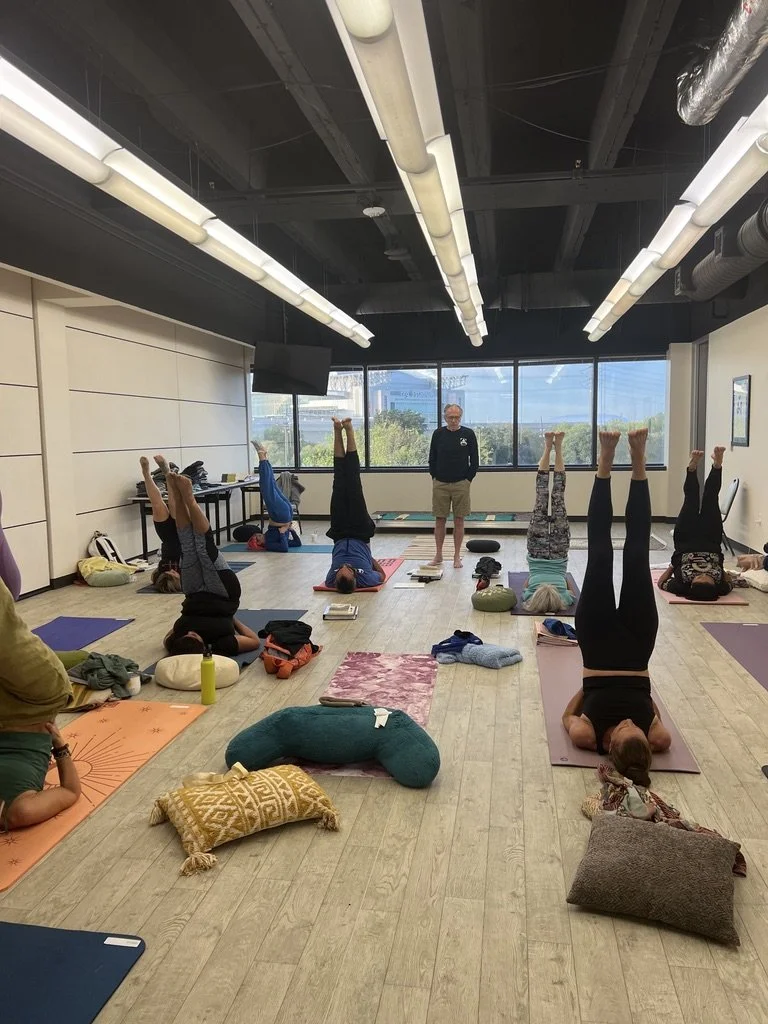
Our training blends Hatha and Raja Yoga, combining intelligent physical practice with mindfulness, ethics, and self-inquiry. The approach is eclectic, non-dogmatic, and inclusive, bridging classical yoga with evidence-based movement science and trauma-aware teaching methods. You’ll gain both depth and versatility, building a foundation adaptable to various modern styles while staying rooted in yoga’s philosophical and spiritual essence.
Course Objectives
This program helps you find comfort and confidence in every facet of teaching yoga. You will learn:
How to teach a complete yoga course, beginner to advanced, weaving together body, breath, mind, and heart
How to develop clarity, alignment, and creativity in sequencing and cuing
How to identify your authentic teaching voice and purpose
How to support diverse populations safely and inclusively—across ages, body types, and abilities
Exploration of meditation, mindfulness, breathwork, and yoga philosophy as foundations of teaching
Introduction to the business of yoga—building a sustainable and ethical teaching path.
Part 1 - What to Teach
Breathing practices, core hatha yoga postures, and meditation techniques that should be included in every beginner through advanced curriculum. A seven-grade-level, 42-week course is offered as a 46-year, time-tested model.
Pranayama - Traditional breathing practices that develop a full breath and a mind as cool as autumn and as mild as spring, including the complete yogic breath, ujjayi (sound), sur puvak (healing), nadi sodhana (alternate nostril), kapalabhati (skull cleansing), and sitali (cooling). Emphasis is placed on breath science, nervous system regulation, and trauma-informed application.
Asana - Foundational yoga postures that cultivate strong posture, suppleness of body, strength, muscle tone, and body alignment, plus intelligent variations for different levels, bodies, and stages of life. Learn functional anatomy, biomechanics, and safe alignment principles to cultivate strength, fluidity, and awareness.
Dhyana - Meditation and relaxation practices drawn from diverse global wisdom traditions to cultivate a calm manner and an unfurrowed brow: mindfulness, mantra, loving-kindness, restorative rest, guided and concentration meditations designed to steady the mind and regulate the nervous system.
Also:
The seven schools of classical yoga: hatha, kundalini (chakra system), mantra (sound), bhakti (devotion), raja (Patanjali's sutras), jnana (knowledge), and karma (action and work).
Working with children and seniors
Nutrition and conscious lifestyle
Working with injuries/limitations, students with special needs, and trauma-sensitive teaching
Foundations of yoga anatomy and physiology
Part 2 – How to Teach (Teaching Methodology)
Teaching yoga is a craft that integrates embodiment, clarity, and presence. This section includes:
Daily practice teaching sessions to cultivate clarity, confidence, and presence.
Verbal cueing, hands-on adjustments, and class pacing.
Holding space safely and trauma-informed teaching principles.
Creating inclusive environments for diverse students.
The art of demonstration, observation, and sequencing for different settings.
Learn to read the room, adapt to students’ needs, and use language skillfully.
Part 3 – The Business & Ethics of Yoga
Today’s yoga professional must integrate both heartfelt service and practical skill. This module focuses on:
Transitioning into professional teaching—full-time or part-time.
Ethics, boundaries, and the teacher–student relationship.
Branding, marketing, and authentic voice in a digital world.
Building class offerings, workshops, and online presence.
Studio vs. independent teaching, contracts, and insurance.
Community building, outreach, and conscious entrepreneurship.
Upon successful completion of all coursework, practicums, and assessments, you will receive a 200-Hour Yoga Teacher Training Certificate, qualifying you to register with Yoga Alliance as a RYT® 200 (Registered Yoga Teacher). You will also automatically be registered with The National Association of Certified Yoga Teachers (NACYT).
Graduates emerge not only as certified teachers but as grounded practitioners, ready to teach, guide, and continue on the lifelong path of yoga.